
Fall cleanup makes a property look better, but it can also support the lawn underneath. Leaves, the last few mowings and the kind of grass growing in the yard all affect what should happen before winter. In Topeka, November is not the time to start every fall lawn project—but there are still useful steps that can leave the property cleaner and help the grass enter winter in better condition.
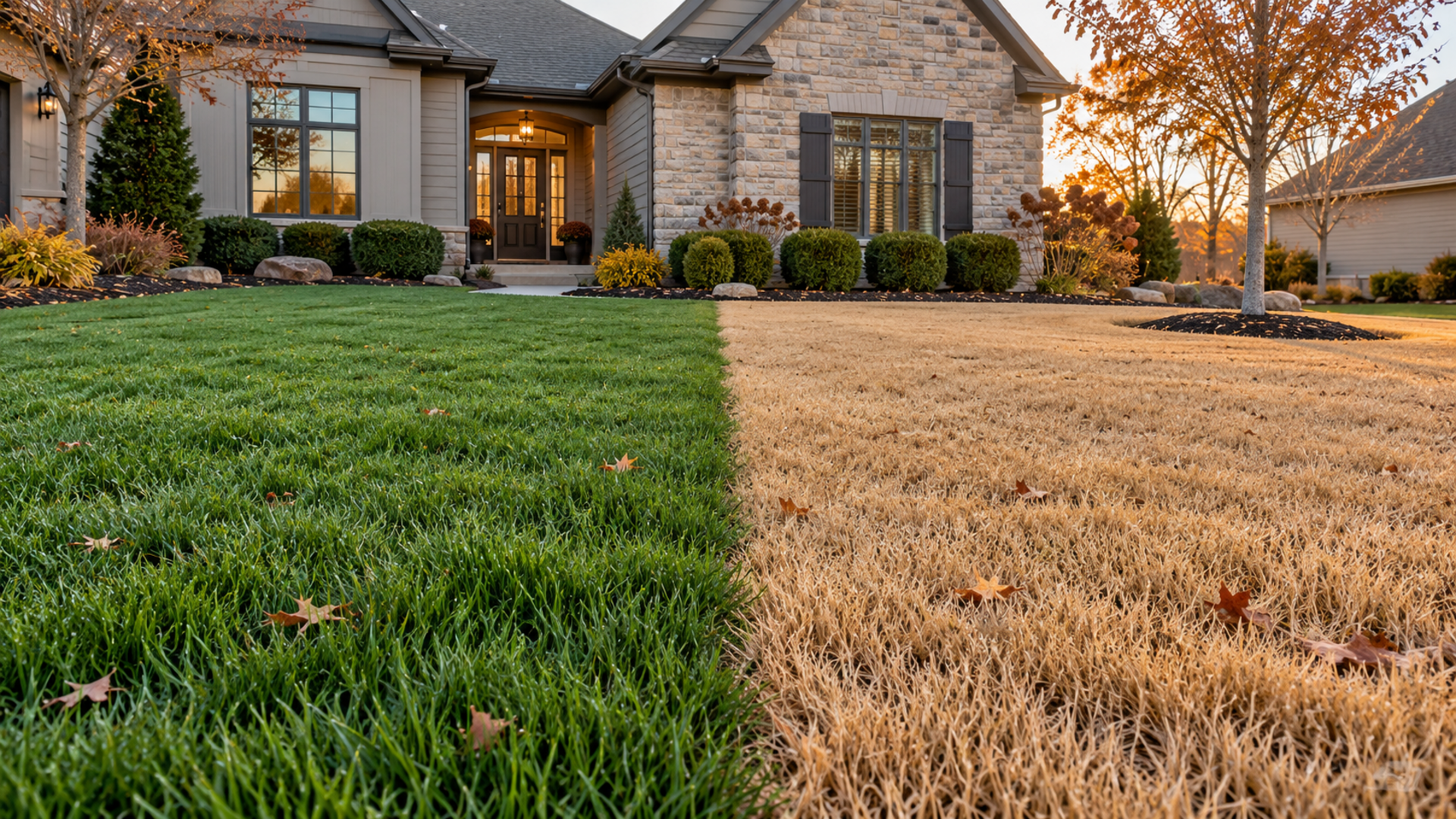
The key is to work with the lawn that is actually there. Tall fescue and other cool-season grasses behave differently from warm-season lawns such as zoysia or bermudagrass. A good fall plan starts by noticing what is still growing, where leaves are collecting and which areas need attention now.
Keep Leaves from Becoming a Heavy, Wet Layer
A light scattering of dry leaves does not always need to be bagged. When conditions are right, mowing over a small amount can break the leaves into finer pieces that settle into the lawn. But a thick or wet layer is different. It can block light, hold moisture and make the yard harder to clean once everything becomes compacted.
The practical approach is to look at how much material is present. Light leaves may be mulched during mowing. Heavier buildup around fences, paths, patios, lawn edges and landscape beds usually needs to be cleared so the property does not carry that mess into winter.
Continue Mowing While the Grass Is Still Growing
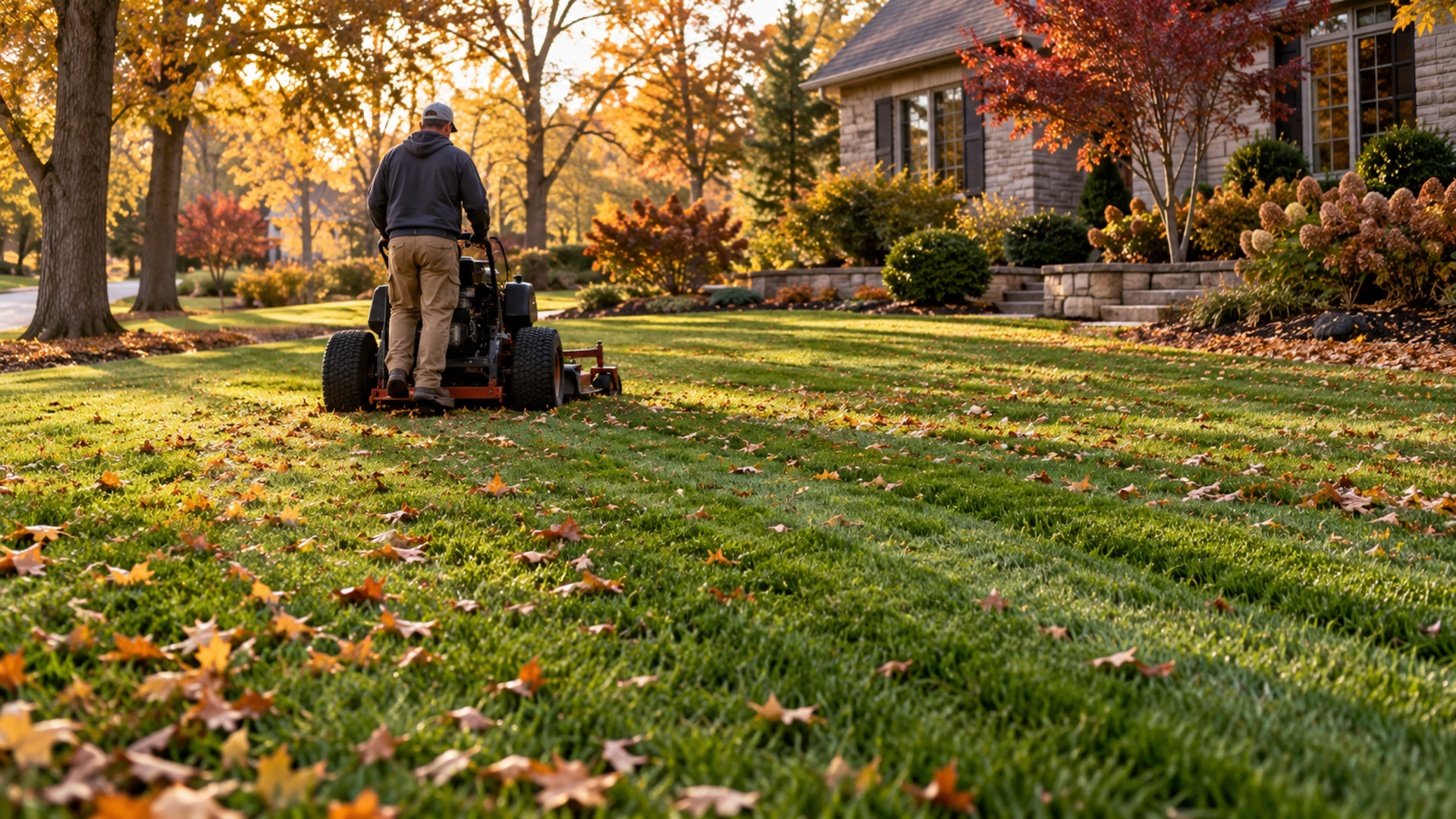
The last mow should follow the grass—not an arbitrary date on the calendar. Cool-season lawns may continue growing after warm-season grass has begun to turn tan and dormant. If the lawn still needs mowing, cutting it cleanly can also help manage scattered leaves and leave the property looking cared for.
There is no need to scalp a tall-fescue lawn for winter. K-State Research and Extension lists a normal mowing range of roughly 2½ to 3½ inches for tall fescue and recommends removing no more than one-third of the grass height at one mowing. Gradual, routine mowing is better for the lawn than waiting too long and cutting it drastically all at once.

November Can Still Matter for Cool-Season Lawns
For established tall fescue and bluegrass, K-State identifies September and November as the most important fertilizing periods. A November application can help the grass store energy and green up earlier in spring. That recommendation is for cool-season turf; warm-season lawns follow a different schedule and are generally fertilized while actively growing in late spring and summer.
Fertilizer should never be treated as one product or one amount for every yard. The grass type, soil conditions and product directions matter. Phosphorus, potassium, lime and sulfur should be added only when a soil test indicates they are needed. If you are unsure what is growing in the yard or what the soil needs, identify those things before applying anything.
Aeration and Overseeding Are Earlier Fall Projects
Core aeration can help compacted soil, and overseeding can improve thin cool-season lawns, but those jobs are normally planned earlier. September is the preferred period for many tall-fescue renovation projects because new grass needs time to germinate and establish before winter.
By November, the better move is often to make notes about thin areas, drainage problems and compacted paths so they can be addressed at the right time next season. Fall cleanup offers a clear view of the property and can make those problem spots easier to see.
Do Not Forget Dry Fall Weather
Cooler air does not always mean the soil has enough moisture. Established cool-season grass and newer seedlings may still need water during dry autumn stretches. Watering needs vary with rainfall, soil and grass type, so check the ground rather than following a rigid schedule. Deep, less frequent watering is generally more useful than a small amount every day.
The goal is not to force the yard to look like summer. It is to leave the lawn and surrounding property in a sensible condition for the season: leaves managed, grass cut appropriately, paths and edges cleared and obvious trouble spots noted for future attention.