
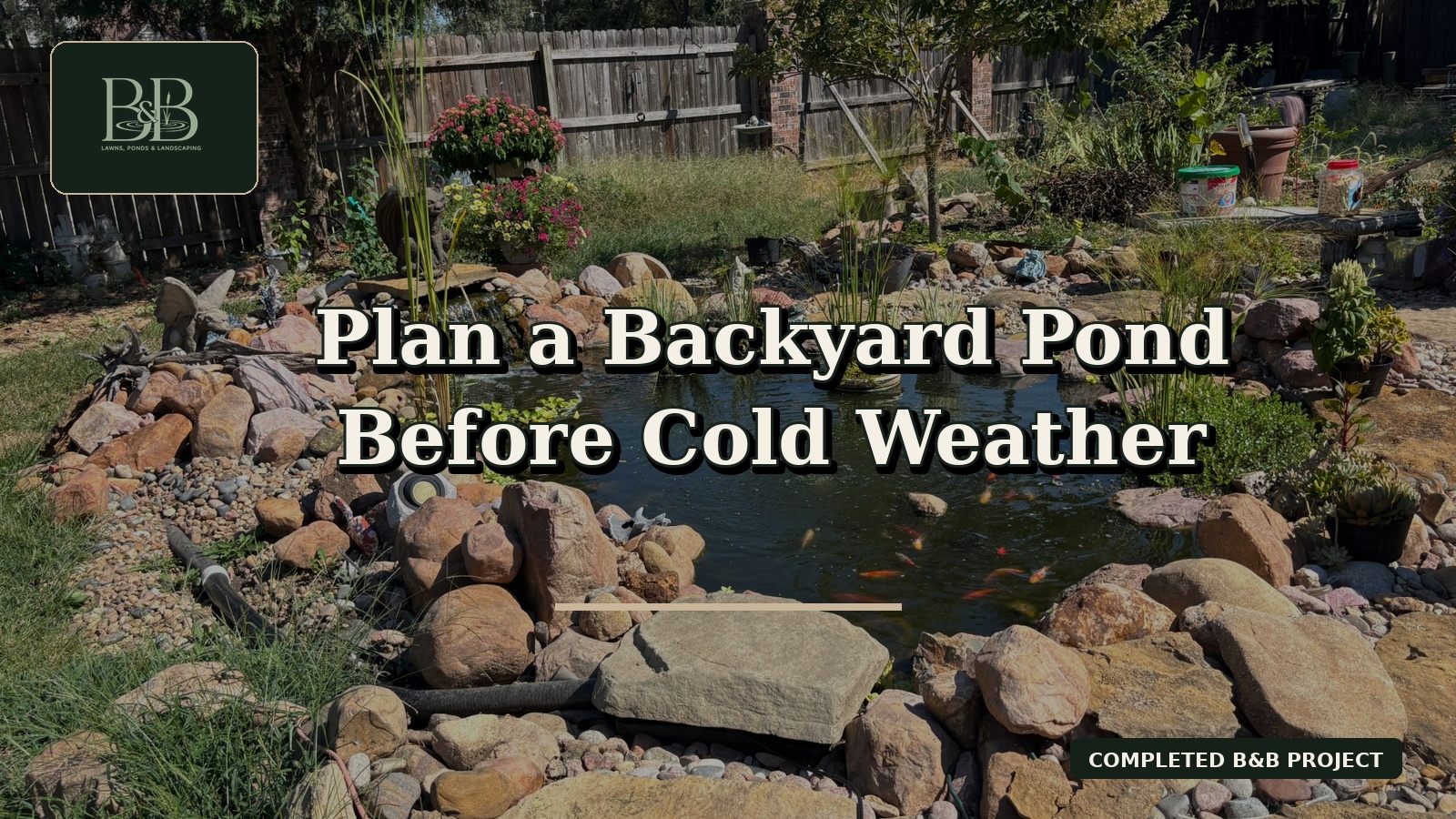
The first cold morning does not have to end the conversation about a backyard pond. In fact, the weeks before winter can be a useful time to study the property, decide what the water should add to the yard, and begin a practical plan without rushing into construction.
Planning now does not guarantee that a pond will be completed before cold weather. Weather, site conditions, project scope, materials, and B&B’s remaining schedule all affect timing. What early planning can do is replace a general idea with clearer questions, realistic priorities, and a better next step.
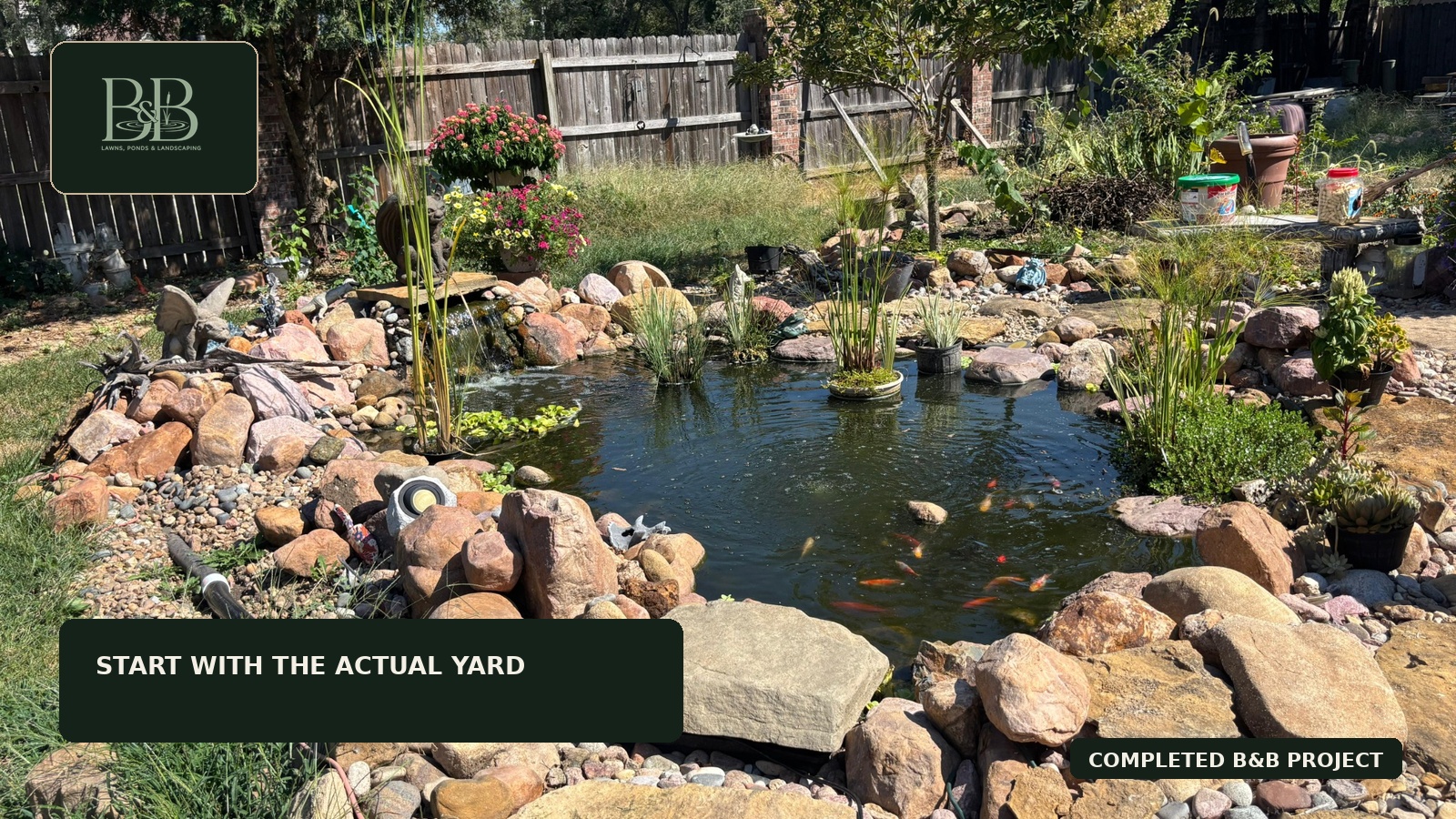
Start backyard pond planning with the actual yard
A pond should fit the property rather than being copied from a picture. Begin by looking at the yard from the places where you spend time: the patio, kitchen window, deck, or favorite seating area. Where would the water be seen and enjoyed most often? Would it become the main focal point, soften an unused corner, or connect two parts of the landscape?
The wide view also reveals how the pond would relate to the lawn, beds, walkways, fencing, trees, and the house. A successful water feature is not only a basin of water. It is part of the whole outdoor space.
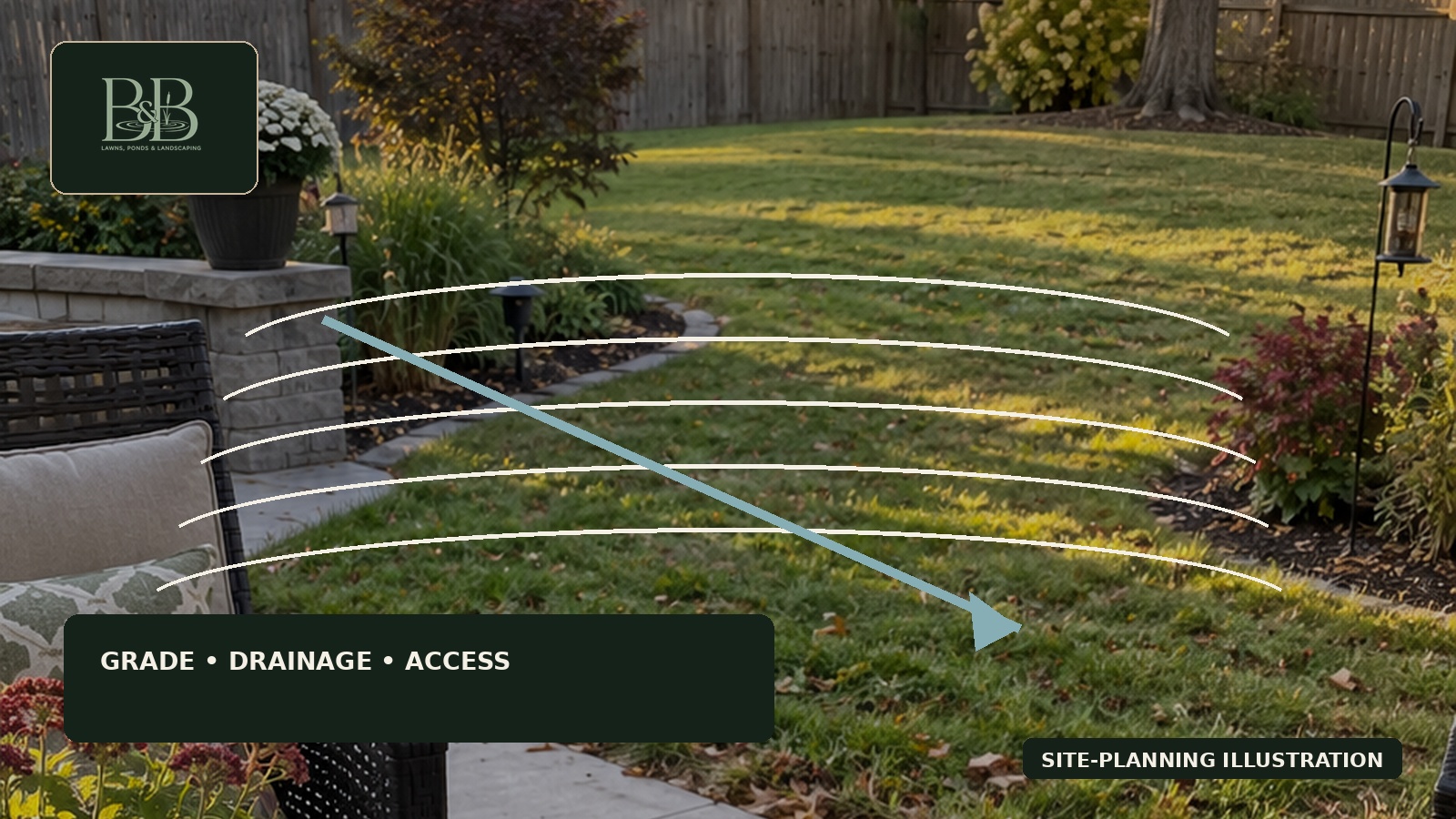
Evaluate slope, grade, drainage, and access
The shape of the property influences nearly every pond decision. A slope may create an opportunity for moving water or a change in elevation, while a flatter yard may call for a quieter transition. Existing drainage patterns matter because runoff should not carry lawn chemicals, soil, or debris directly into the pond.
Access is equally important. The project area must be reachable for excavation, stone, equipment, and materials. Gates, narrow side yards, fences, utilities, mature trees, patios, and neighboring structures may affect how the work is approached.
These are site-specific questions. They are best answered by walking the property rather than trying to diagnose the entire project from a few photographs.
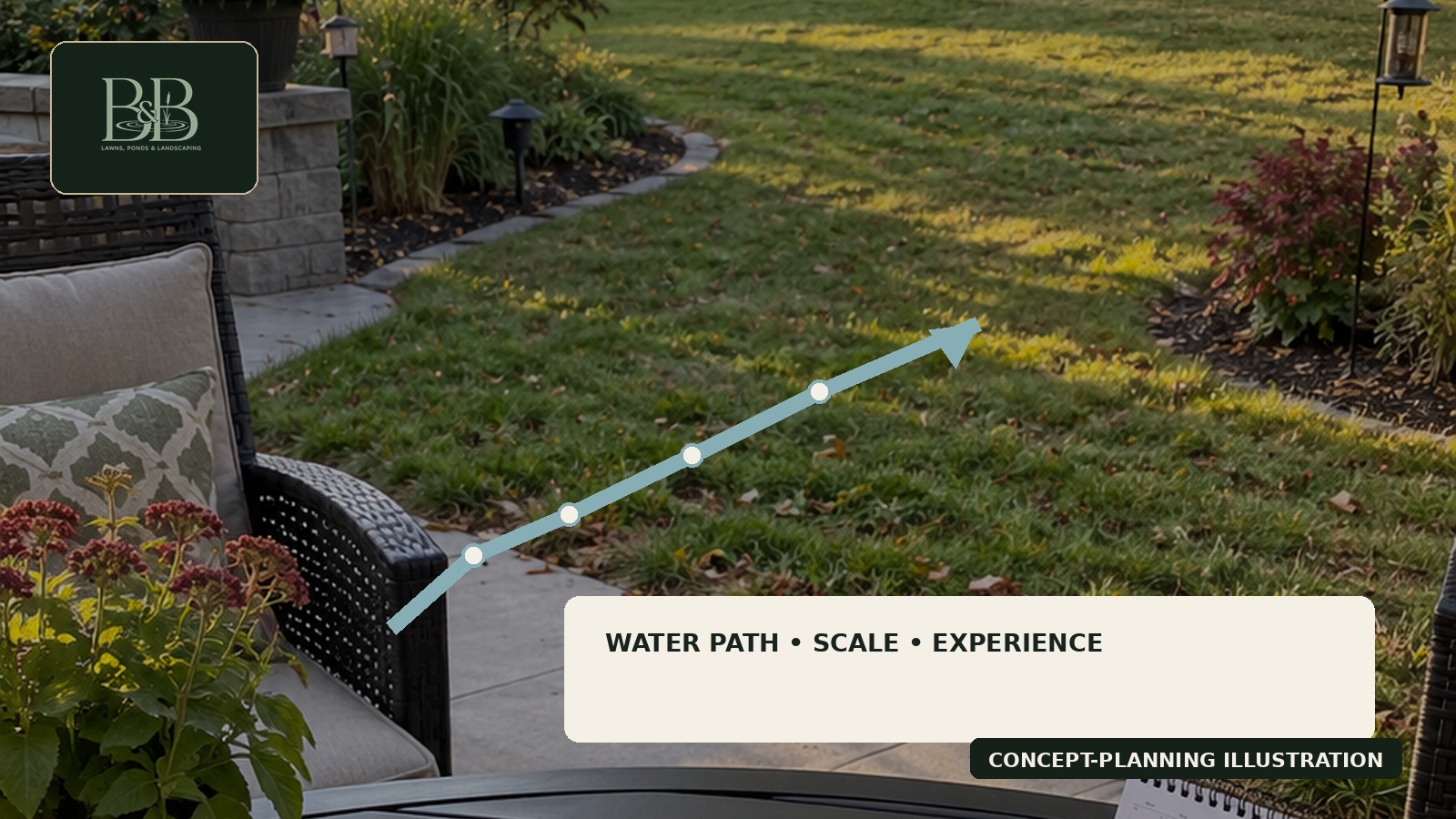
Decide how you want the water to feel
Before choosing an exact shape, think about the experience you want. Should the water feel calm and reflective? Should it create a gentle spill that can be heard from nearby seating? Would you prefer stronger movement and a more noticeable waterfall?
The desired sound and movement influence the water path, elevation changes, transitions, and landing areas. A dramatic drop is not automatically better. The right choice is the one that suits the scale of the yard and the atmosphere you want to create.
Plan the pond’s scale before choosing details
The pond should be large enough to feel intentional but appropriate for the property and the level of ongoing care the homeowner wants. Consider how much lawn or landscape space it will replace, whether fish or aquatic plants are part of the plan, and how the pond will look from several angles.
Scale also affects the amount of stone, excavation, circulation, and surrounding landscape work involved. Defining the desired experience first helps keep later material choices connected to the original goal.
Include stone, planting, and edges in the pond plan
The water may be the focal point, but the edges determine whether the feature feels anchored in the yard. Stone placement should appear stable and purposeful. Planting can soften transitions, add height and texture, and visually connect the pond to existing beds.
It is also important to think about the lawn edge, paths, seating, and safe access for routine care. Leaving these decisions until the end can make a finished pond feel separate from the rest of the property.
Plan for access and ongoing pond care
Every pond needs some level of care. The plan should account for reaching pumps, skimmers, filters, plants, and areas where leaves or debris may collect. Nearby trees, sun exposure, the desired fish or plant life, and the homeowner’s maintenance preferences all belong in the early conversation.
A feature that looks beautiful but is difficult to reach may become frustrating. Practical access can be incorporated without making it the visual focus.
What can be decided before cold weather?
Even when construction timing remains open, homeowners can use the remaining outdoor season to:
- Identify the best viewing and enjoyment area.
- Discuss the desired sound, movement, and overall atmosphere.
- Evaluate grade, drainage, utilities, and access.
- Choose an appropriate general scale.
- Consider how stone, planting, lawn, paths, and seating should connect.
- Determine whether the next step is a site visit, consultation, or estimate.
Starting the conversation now can also make it easier to understand B&B’s remaining schedule and whether the project should move forward this season or be planned for a later opening.
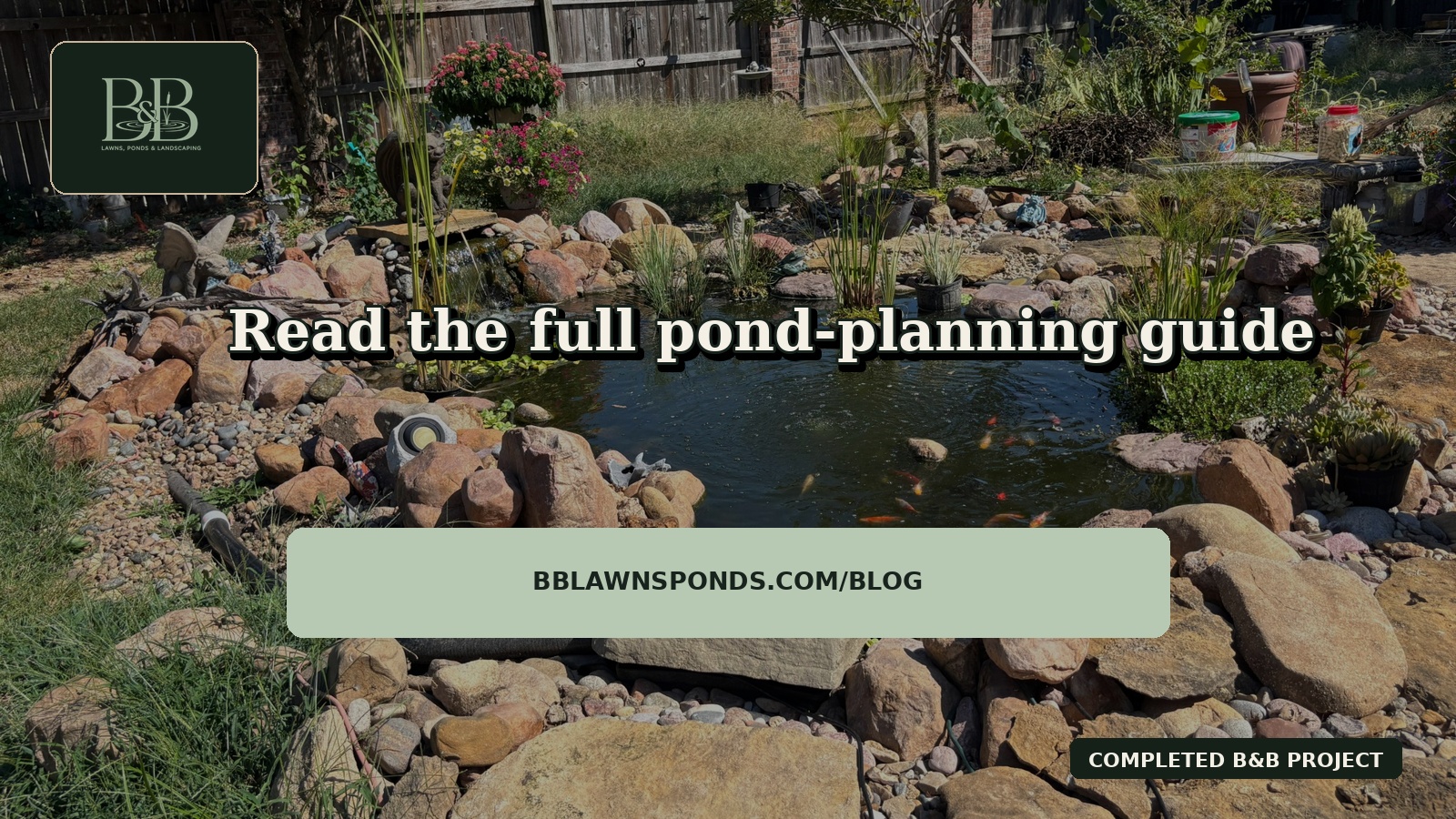
Begin with a pond-planning conversation
If a pond or water feature is still on your outdoor wish list, start with the actual yard and the experience you want to create. Contact B&B Lawns, Ponds & Landscaping at (785) 250-1745 or send a project inquiry with your city and a brief description of the space.